
France Downplays Financial Exposure Risks
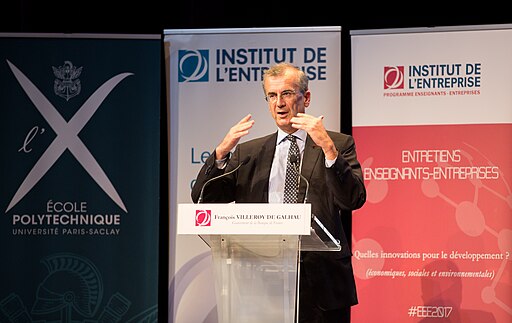
France’s financial sector has limited exposure to the escalating Middle East crisis, according to Banque de France governor François Villeroy de Galhau, who also cautioned against reactive monetary policy shifts driven by energy price volatility.
Speaking to reporters in Paris, Villeroy said France’s finance industry remains only lightly exposed to the regional turmoil. He added that the broader French economy is characterised by relatively low inflation and resilient economic growth, suggesting that immediate systemic risks are contained despite heightened geopolitical tensions.
The governor addressed the potential implications for European Central Bank policy, warning that it would be a mistake to base interest rate decisions solely on fluctuations in energy prices. He stressed that monetary policy should not respond hastily to instantaneous movements in energy markets, underlining that the ECB’s rate-setting framework considers a wider set of economic indicators rather than short-term commodity shocks.
His remarks come as markets monitor the inflationary consequences of conflict in the Middle East, particularly through energy channels. While rising oil and gas prices can transmit quickly into headline inflation, Villeroy indicated that such movements alone should not dictate policy direction. The emphasis reflects a broader central banking approach that seeks to distinguish between temporary price swings and sustained inflationary pressures.
For financial institutions, the assessment of limited direct exposure offers reassurance at a time of heightened volatility across global markets. However, the governor’s comments also underscore the importance of maintaining disciplined policy evaluation amid geopolitical uncertainty. By resisting automatic responses to energy-driven price movements, the ECB aims to preserve credibility and avoid compounding market instability through premature rate adjustments.